
40 Kids YouTube Video Ideas That Kids Rewatch (Ready to Make)
Stuck on what to make next? Here are 40 original kids YouTube video ideas grouped by age and format, each written as a one-sentence premise you can paste straight into a studio, plus tips for turning the best ones into a recurring series.
By the ClipyToons teamUpdated 8 min read
What makes a kids video idea worth making
Before the list, a quick filter. An idea is worth your time when it passes these four checks:
- One character you can describe in five words. "A shy penguin who loves counting." If you need a paragraph, simplify.
- A small, relatable problem. Losing a toy, not wanting to share, being scared of the dark, forgetting a friend's birthday. Kids connect with problems they've had.
- A satisfying, predictable shape. Children love knowing what comes next. A repeated line, a three-try pattern, or a countdown gives them something to join in on.
- A reason to watch again. A song-like refrain, a joke that lands every time, or a lesson they're proud to know.
What to avoid: shock thumbnails, fake urgency, and anything that copies a famous show's characters or plot. It's not just a quality issue. Copied characters can get videos removed, and YouTube's policies are strict about content aimed at kids.
Ideas for toddlers (about 1 to 3)
Keep these slow, bright, and repetitive. One concept per video, lots of sound words, and a length of about 1 to 3 minutes.
- Peekaboo Farm. Farm animals hide behind a hay bale one by one, and each reveal comes with its sound.
- The Big Red Ball. A bouncing ball visits different rooms and meets something new that's the same color each time.
- Bath Time Boats. A rubber duck and a little boat learn "float" and "sink" with splashy sound effects.
- Goodnight, Toys. A child tucks in each toy with the same gentle line, ending with a sleepy "goodnight."
- Shapes in the Park. A curious puppy finds circles, squares, and triangles hiding in swings, sandboxes, and kites.
- Who's at the Door? Knock, knock, and a different friendly animal visits each time, with a guessable sound first.
- Little Cloud's Colors. A small cloud turns red, yellow, and blue as it floats over flowers, the sun, and the sea.
- Tidy-Up Train. A toy train collects blocks, cars, and balls, putting each one back where it belongs.
Ideas for preschoolers (about 3 to 5)
Preschoolers can follow a simple story with a feeling and a lesson. Aim for 2 to 5 minutes with two or three characters.
- Penny Penguin Counts to Ten. Penny needs ten snowballs for a snow fort, and viewers count each one with her.
- The Kindness Cape. A little fox finds a cape that only works when she does something kind.
- Share the Sun. Two flowers argue over the sunshine until they realize the sun is big enough for everyone.
- The Letter Garden. A bunny plants seeds that grow into letters, then words, spelling a surprise for a friend.
- Rainy Day Rainbow. A bored kitten discovers everything fun you can do inside while waiting for the rainbow.
- Brave Little Bridge. A wobbly rope bridge is scared of the heavy bear, then finds out it's stronger than it thought.
- Helper Heroes. Two siblings help neighbors with small jobs, and each job teaches a new community helper role.
- The Missing Sock. A detective mouse follows clues around the house to find where the other sock went.
- Too Many Feelings. A little dragon learns names for mad, sad, glad, and scared, and a calm breath for each.
- The Noisy Picnic. Forest friends want a quiet picnic, but everyone keeps making sounds. Guess who's making each one.
Ideas for early readers (about 5 to 8)
Older kids want humor, gentle stakes, and characters who make mistakes and fix them. Episodes of 3 to 5 minutes work well.
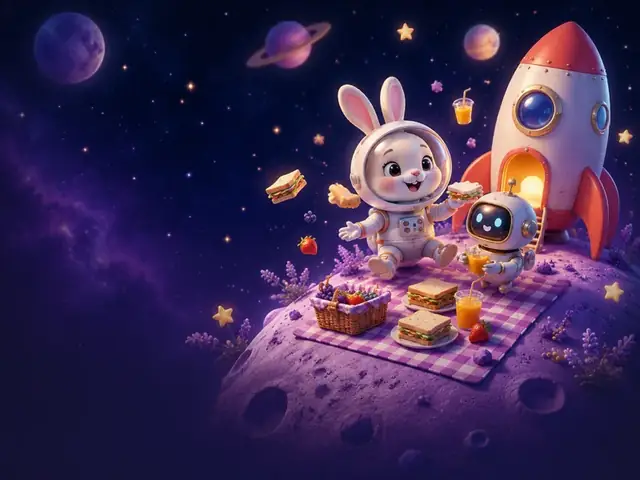
- Rocket Picnic. Two friends pack a picnic for the moon, then realize they forgot one very important thing.
- The Robot Who Couldn't Laugh. A helper robot studies jokes from all its friends to figure out what "funny" means.
- Giggle Garage. A car mechanic fixes cars with silly problems: a car that hiccups, one that's ticklish, one that only drives backward.
- Grandpa's Time-Travel Watch. A kid and grandpa visit a real moment in history, like the first airplane flight, and get home for dinner.
- Ocean Choir Tryouts. A shy crab wants to join the reef's choir, and learns everyone has a different voice worth hearing.
- The Great Lemonade Mix-Up. Two friends run a lemonade stand, and a mistake with the recipe teaches measuring and teamwork.
- Planet of the Lost Toys. Toys left behind at the park end up on a planet where they help each other get home.
- Why Is the Sky Blue? A curious owl asks the wind, the sun, and a raindrop, and explains the answer in kid-sized words.
- The Sock Puppet Circus. A backyard circus run by sock puppets goes wrong in all the best ways.
- Autumn Leaf Race. Leaves race down the river, and the slowest one sees the most interesting things on the way.
Learning and classroom ideas
Learning videos rank and get shared when they teach one thing clearly. These also suit teachers and homeschool families.
- Days of the Week Parade. Seven animal friends each lead the parade on their own day.
- Five Senses Detectives. A team solves a mystery using sight, hearing, smell, touch, and taste, one sense per clue.
- How a Seed Grows. A seed narrates its own journey from soil to sprout to flower.
- The Water Cycle Adventure. A raindrop travels from cloud to river to ocean and back up to the sky.
- Opposites Island. Everything on the island comes in pairs: big and small, fast and slow, loud and quiet.
- Brush Your Teeth, Captain! A pirate learns why brushing twice a day keeps his treasure smile shining.
Keep facts accurate and simple, and check them once before you render. For more on classroom use, including privacy tips for students, read how to make educational videos for kids with AI.
Shorts ideas: one moment, under a minute
Shorts aren't mini episodes. They're one strong moment: a joke, a surprise, a question. Use them to introduce your characters to new viewers.
- Guess the Sound. Your character hears a sound, and viewers guess what it is before the reveal.
- One-Question Quiz. "How many legs does a spider have?" Count along, then the answer.
- Character Reacts. Your main character tries a lemon, sees snow for the first time, or meets a giant bubble.
- Tiny Lesson. One kindness tip, one safety tip, or one fun fact in under 30 seconds.
- Blooper Moment. Your characters get something hilariously wrong, then get it right.
- Countdown Challenge. "Can you freeze before the count of five?" Kids play along at home.
Make each Short as its own 9:16 project, 15 to 60 seconds long, with a hook in the first two seconds. Our guide to Shorts vs. long-form kids video length covers when to use each.
Turn one idea into a series
The strongest channels don't chase a new idea every day. They pick a few characters kids love and give them a fresh problem each episode.
How to build a series from one idea
- Keep the cast. Same main character, same best friend, same world. Kids come back for people they know.
- Change the problem. Penny Penguin counts snowballs in episode one, fish in episode two, and stars in episode three.
- Keep a signature moment. A catchphrase, a counting line, or a goodnight wave at the end. It becomes your channel's trademark.
- Plan 8 to 12 episodes at once. Write each as a one-sentence premise. You'll never stare at a blank page again.
Why variety matters on YouTube
YouTube's monetization policies allow a series that follows the same characters across episodes, but they don't allow repetitive content where each video is nearly the same with only small changes. Give every episode its own storyline and lesson. That's better for kids too.
For the full channel playbook, see how to start a kids YouTube channel with AI and YouTube monetization for AI kids content.
Turning an idea into a video in ClipyToons
Every idea above is written as a one-sentence premise, which is exactly what the studio's idea box expects.
- Paste the idea into the [studio](/studio), or start from a matching preset like Count to Ten, Kindness Cape, Rocket Picnic, or Penguin Parade.
- Pick a format and length. 16:9 for full episodes, 9:16 for Shorts, from 5 seconds with no 5-minute limit (Starter makes videos up to 1:30 min; Pro Plus and Premium make longer ones).
- Review the script. The studio writes a kid-friendly script for you to approve and edit. Add your catchphrase or repeated line.
- Cast your characters by describing them, including their voice. Reuse the same descriptions across episodes to keep a series consistent.
- Approve the characters and the place for free. Nothing is charged before you render; the optional Advanced view also lets you edit single shots.
- Render. Tap Render video to see the price first. If you don't have a plan yet, pick one right there and the video starts as soon as you've paid. Characters speak lip-synced lines, with sound effects and ambience, and captions are burned in (you can switch them off).
Each finished video comes with a publish pack: a title, description, and tags you can edit before posting. Monthly plans start at $19.99, and unused credits stay in your balance.
Frequently asked questions
What kind of kids YouTube videos get the most rewatches?
Videos with a familiar character, a small problem, and a predictable, satisfying shape: a repeated line, a countdown, or a three-try pattern. Kids rewatch what they can join in on.
How long should a kids YouTube video be?
About 1 to 3 minutes for toddlers, 2 to 5 minutes for preschoolers, and 3 to 5 minutes or more for early readers. Shorts should be under a minute and focus on one moment.
Can I use these ideas on my own channel?
Yes. They're starting points. Add your own characters, names, and details to make each one original. That's also what YouTube's policies expect from monetized channels.
How many video ideas should I plan before launching?
Plan a season of 8 to 12 episode premises with the same characters before you publish. It keeps your schedule steady and your stories varied.
Do I need to mark these videos as Made for Kids?
If your videos are made for children, YouTube requires you to set them as Made for Kids in YouTube Studio. This follows COPPA rules and turns off comments and personalized ads on those videos.
Sources
- YouTube Help: YouTube channel monetization policies
- YouTube Help: Determining if your content is made for kids
- YouTube Help: Quality principles for kids and family content
Platform policies change. We review this guide regularly; always check the official pages before making decisions.
Pick an idea and make it today
Paste any idea from this list into the studio, preview the script and characters for free, and only spend credits when you render.
Planning is free — you pay when you render · monthly plans from $19.99