
YouTube Monetization Rules for AI Kids Videos: Made for Kids, Inauthentic Content & AI Disclosure
A sourced, plain-English walkthrough of the YouTube rules that decide whether AI kids content can earn: Partner Program eligibility, Made for Kids and COPPA, kids quality principles, the inauthentic content policy, and AI disclosure, plus a checklist you can use before every upload.
By the ClipyToons teamUpdated 9 min read
Before you start: what this guide is (and isn't)
This guide summarizes YouTube's public policies as of September 2026, with links to every official page we used. It is not legal advice, and it can't tell you whether a specific video qualifies. YouTube updates these rules regularly. For example, it has announced Partner Program terms updates starting February 1, 2027. Always check the linked pages yourself, and talk to a lawyer if you're unsure about COPPA obligations.
Nothing here is a promise that a channel will be accepted, grow, or earn. Whether a video can make money is decided by the platform, not by the tool you used to make it. That applies to ClipyToons videos too (see can I monetize my videos).
How YouTube monetization works for AI kids content
To share in ad revenue, a channel has to be accepted into the YouTube Partner Program (YPP). The rules are the same whether your videos are filmed, hand-animated, or made with AI.
Eligibility thresholds
According to YouTube Help, you can apply once you reach either:
- 1,000 subscribers and 4,000 qualified public watch hours on long-form videos in the last 12 months, or
- 1,000 subscribers and 10 million qualified public Shorts views in the last 90 days.
Watch hours from Shorts viewed in the Shorts feed don't count toward the 4,000 hours. You also need 2-Step Verification, no active Community Guidelines strikes, a linked AdSense for YouTube account, and to live in a country where YPP is available. For ad revenue, YouTube requires you to be at least 18, or to have a legal guardian who handles payments.
In many countries there's also an expanded, lower tier (500 subscribers, 3 public uploads in 90 days, and 3,000 watch hours or 3 million Shorts views) that unlocks fan funding and Shopping, but not ad revenue. Many of those features, like channel memberships, aren't available on made-for-kids content anyway.
Hitting the numbers isn't enough
YouTube reviews your channel as a whole, typically in about a month. Reviewers may focus on your main theme, most-viewed and newest videos, the videos with the most watch time, your titles, thumbnails, and descriptions, and your About section. That's why channel-wide quality matters more than any single hit.
Made for Kids and COPPA: the setting you can't skip
Every creator, anywhere in the world, must tell YouTube whether their content is made for kids. The requirement comes from YouTube's settlement with the FTC and the New York Attorney General, and it helps creators comply with COPPA. In the US, a kid is anyone under 13.
How to tell if your video is made for kids
YouTube and the FTC point to factors like the subject matter, whether children are your intended or actual audience, animated characters or cartoon figures, child-friendly language, simple songs, stories, games, or early education, and whether the content is advertised to kids. A typical AI cartoon story for young children hits several of these.
Content that is merely "family friendly," or that children might watch by accident, is not automatically made for kids. Animated content that genuinely appeals to everyone can be general audience.
What the setting turns off
YouTube lists these features as unavailable on made-for-kids videos: personalized advertising, comments, the notification bell, cards and end screens, autoplay on home, the miniplayer, save to playlist and Watch Later, channel memberships, merchandise and ticketing, live chat, Super Chat and Super Stickers, and video watermarks. YouTube notes that losing personalized ads "may result in a decrease in revenue for some creators."
Why not just leave it off?
YouTube uses machine learning to detect content that's clearly for kids and can override your setting. If YouTube locks a video as "Set to made for kids," you can appeal once. More importantly, YouTube and the FTC both say mislabeling can have legal consequences under COPPA. The FTC's guidance for channel owners explains that COPPA applies to child-directed content just as it would to a website or app.
YouTube's quality principles for kids content
If your channel has made-for-kids content, YouTube uses its quality principles for kids and family content to decide monetization. A channel with a strong focus on low-quality kids content can be suspended from YPP, and individual low-quality videos can get limited or no ads. High-quality kids content, on the other hand, can get raised up in recommendations and considered for YouTube Kids.
Low-quality signals YouTube currently enforces
- Heavily promotional: mainly products, brands, or unboxing.
- Encouraging negative behaviors: dangerous pranks, bullying, dishonesty, wastefulness.
- Deceptively educational: promising to teach numbers or colors, then getting them wrong.
- Hard to follow: jumbled plots, unclear audio, or no beginning, middle, and end. YouTube notes this is "often the result of mass production or autogeneration."
- Sensational or misleading: bizarre or exaggerated content, including keyword stuffing.
- Strange use of children's characters: familiar characters in inappropriate or risky situations.
What high quality looks like
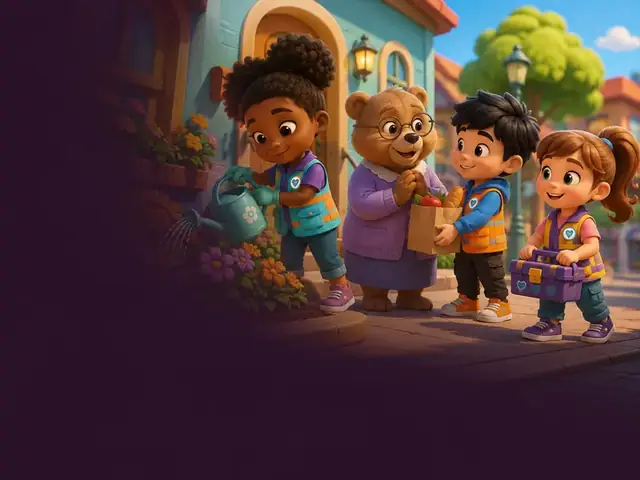
YouTube's list of positive principles includes looking after yourself and others, learning and curiosity, creativity and imagination, life skills with a complete narrative and clear takeaway, and showing kids the wider world. A kindness story with a clear problem and resolution, like the one behind the Helper Heroes preset, fits this well.
The inauthentic content policy and AI-made videos
On July 15, 2025, YouTube renamed its "repetitious content" policy to "inauthentic content" and clarified that it covers content that is repetitive or mass-produced. YouTube said this type of content had always been ineligible to monetize. The reused content policy, which covers clips, compilations, and reactions, didn't change.
What YouTube explicitly allows
- A series following the same characters, as long as each video has a distinct storyline, focus, or concept.
- The same intro and outro, when the bulk of each video is different.
- "Using AI to visualize a unique character and narrative you invented."
- Using AI tools to help with scripts or visuals, when the final product shows your creative vision.
What isn't eligible
- Characters put in the same situation over and over with the same outcome.
- "AI-generated content made with generic or unoriginal templates giving the impression of mass production."
- Stitched-together, unrelated AI clips with no clear story, made to shock or surprise.
- Repeated scenarios of animals in exaggerated distress or peril.
The practical test is simple: if someone watched five of your videos in a row, would each one feel like a new story? If yes, you're building the kind of channel these policies describe as allowed.
AI disclosure: when to use YouTube's AI use setting
YouTube requires creators to disclose AI content that is realistic: content that makes a real person appear to say or do something they didn't, alters footage of a real event or place, or generates a realistic scene that never happened. You disclose it in YouTube Studio during upload, under Attributes, in the "AI use" setting.
Cartoons usually don't require it
YouTube's examples of content that doesn't need disclosure include clearly unrealistic content, like "someone riding a unicorn through a fantastical world" or an AI-generated animation within a fully animated video. It also includes production help like AI-assisted scripts, thumbnails, titles, and captions. A stylized cartoon story generally falls on this side.
Where to be careful
- Realistic elements: if any part looks photorealistic, disclose.
- Real people: if a cartoon is based on a real person's photo, don't make it look like they actually said or did something. Clearly fictional cartoon stories are different from realistic depictions.
- Music added elsewhere: YouTube lists AI-generated music among the examples that require disclosure. ClipyToons videos come with dialogue, sound effects, and ambience, so this only applies if you add AI music in another editor.
YouTube says disclosing "won't limit a video's audience or impact its eligibility to earn money," and it may auto-label content it detects as AI. Creators who repeatedly fail to disclose when required can face penalties, including YPP suspension. When in doubt, disclosing is the low-risk choice.
TikTok, Instagram, and Facebook
Each platform has its own monetization programs and eligibility rules, and they change often, so check each help center directly. Two things carry across:
- AI labels: TikTok encourages creators to label content that's completely generated or significantly edited by AI, and requires a label on AI content with realistic images, audio, or video. Instagram and Facebook have their own rules, so check Meta's help centers before posting.
- Audience: these apps aren't designed for young children to browse on their own. Kids content posted there usually reaches parents, so write captions for parents.
ClipyToons can publish directly to YouTube where the Connect option is shown. For TikTok, Instagram, and Facebook, you download the MP4 and use the ready-made captions and hashtags from your publish pack.
A practical compliance checklist before you publish
Run through this list for every upload. It takes two minutes and prevents most problems.
Content
- The story, characters, and script are original. There are no famous characters, songs, or images you don't have rights to (see original content and our content policy).
- The episode has a clear beginning, middle, and end, and it's meaningfully different from your last few uploads.
- Any educational claims (numbers, letters, facts) are correct.
- Nothing encourages dangerous or unkind behavior, even as a joke.
- You've watched the full video, including every line of dialogue and caption.
Settings
- Audience is set correctly (Made for Kids if children are the intended audience), and you've checked it in YouTube Studio after upload, whatever tool you uploaded from.
- The AI use setting reflects any realistic AI elements.
- The title and thumbnail are honest, readable, and not keyword-stuffed.
Privacy
- If a character is based on a real child's photo, the title, description, and tags don't reveal their full name, school, or location. Read how ClipyToons handles child photo safety.
Channel health
- Your channel's main theme, newest videos, and About section all describe the same clear, original series.
- You're uploading at a pace you can sustain. YouTube may turn off monetization on channels inactive for six months or more.
For the bigger picture on building the channel itself, see how to start a kids YouTube channel with AI.
Frequently asked questions
Can AI-generated kids videos be monetized on YouTube?
They can be, if the channel meets Partner Program thresholds and passes review. YouTube's policies explicitly allow using AI to bring original characters and stories to life. What isn't eligible is mass-produced, templated, or repetitive content, or low-quality kids content under YouTube's quality principles.
Do Made for Kids videos earn money?
Made-for-kids videos in the Partner Program can still show ads, but not personalized ads. YouTube notes this may reduce revenue for some creators. Features like comments, channel memberships, merchandise, and Super Chat are also unavailable on made-for-kids content.
Do I need to label cartoon videos as AI on YouTube?
Generally not, if they're clearly unrealistic. YouTube's disclosure requirement targets realistic AI content, and its examples of things you don't need to disclose include fantastical, non-realistic scenes and AI help with scripts and thumbnails. Disclose if any part looks realistic. YouTube says disclosure doesn't affect earning eligibility.
What was the "repetitious content" policy renamed to?
On July 15, 2025, YouTube renamed it "inauthentic content" and clarified that it covers repetitive or mass-produced videos. YouTube described it as a clarification, since that kind of content was already ineligible to monetize.
Is this legal advice?
No. This guide summarizes public platform policies as of September 2026 and links to the official sources. Policies change, and whether your content is directed to children under COPPA depends on the specifics. If you're unsure, the FTC and YouTube both suggest getting legal advice.
Sources
- YouTube Help: YouTube Partner Program overview & eligibility
- YouTube Help: Overview of the expanded YouTube Partner Program
- YouTube Help: How to earn money on YouTube
- YouTube Help: YouTube channel monetization policies (includes inauthentic content update)
- YouTube Help: Set your channel or video's audience
- YouTube Help: Determining if your content is "made for kids"
- YouTube Help: Best practices for kids & family content
- YouTube Help: Disclosing use of GenAI content
- FTC: YouTube channel owners — Is your content directed to children?
- FTC: Complying with COPPA — Frequently Asked Questions
- TikTok Support: AI-generated content
Platform policies change. We review this guide regularly; always check the official pages before making decisions.
Make original episodes you're proud to publish
Start from your own idea, edit the script and approve your characters for free, and watch the finished film before you publish.
Planning is free — you pay when you render · monthly plans from $19.99